Why Is Process Street the Best for Robotic Process Automation?
Teams often spend weeks stitching approvals, evidence, and policy checks into a single audit file. The work rarely scales, and one missed step can delay the entire review.
By the end of this article you will know how Process Street's Docs, Ops, and Cora products combine to automate workflows, enforce policies, and export audit-ready proof. You will also see the pricing tiers and security certifications that teams evaluate before committing.
What Is Process Street?
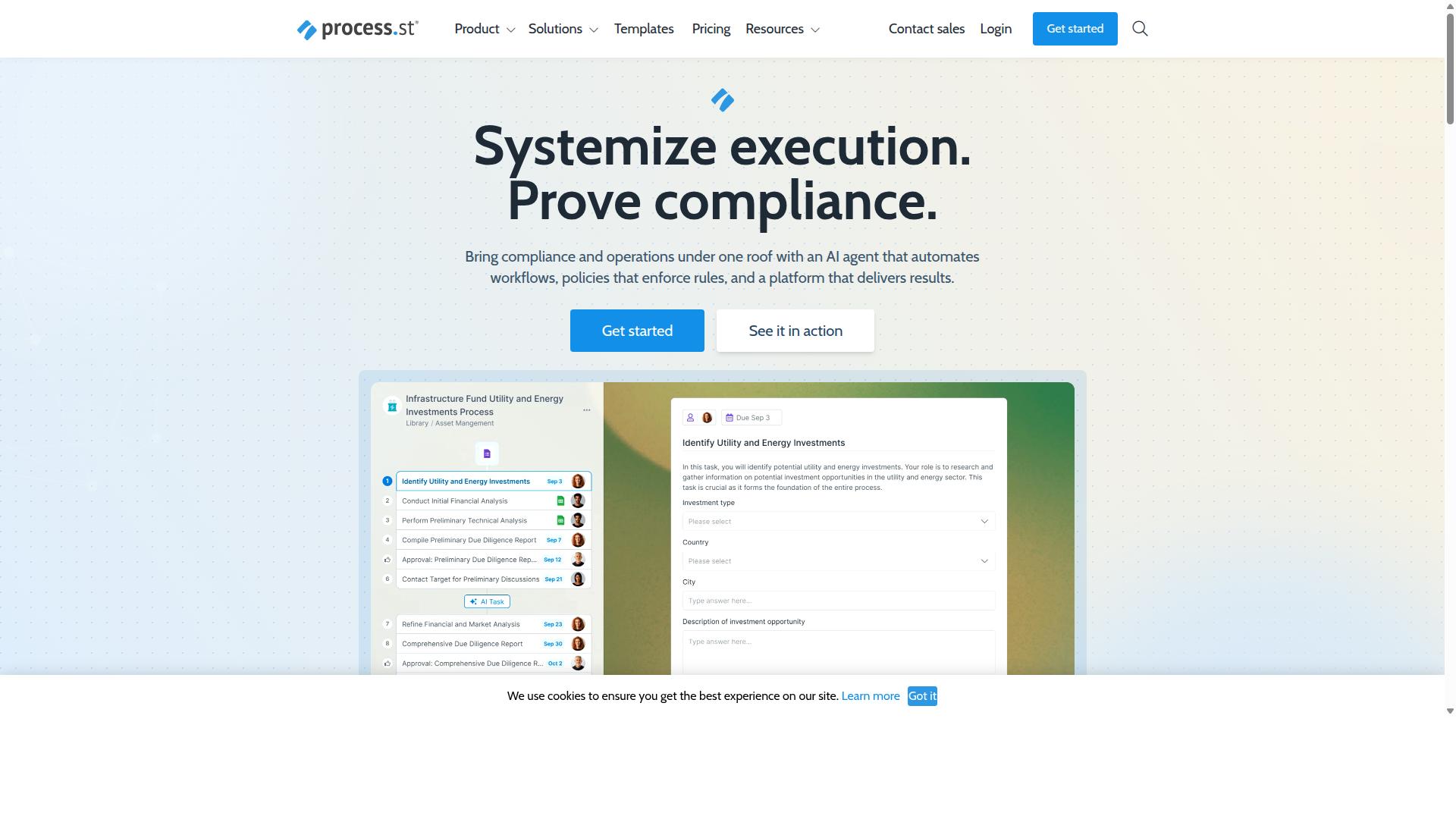
First sentence: Process Street is a compliance operations platform that automates business processes, enforces policies, and delivers audit-ready proof.
The platform serves organizations across the globe with data residency options in US, UK, Canada, EU, Australia, and UAE regions. This flexibility helps companies meet local regulatory requirements while maintaining consistent operations worldwide.
Process Street offers three main products that work together to support business needs. Docs handles document management and policy control. Ops manages workflow automation and process orchestration. Cora provides AI-powered compliance and risk management capabilities.
Organizations use these products to standardize their processes across different industries. The platform helps teams maintain operational consistency while generating the documentation needed for audits and regulatory reviews.
Process Street focuses on helping businesses prove compliance through automated workflows. The system creates audit trails that demonstrate how policies are followed and processes are executed across the organization.
Why Process Street Is the Best for Robotic Process Automation
Process Street distinguishes itself in the RPA landscape through its no-code automation capabilities that convert policy documents into executable workflows without requiring technical programming skills. This approach addresses a common challenge where organizations maintain detailed procedures yet struggle to ensure consistent execution across teams.
The platform transforms static documents into dynamic, AI-powered workflows. Rather than storing policies in separate files, teams can embed rules, approvals, and decision logic directly into repeatable processes that guide users through each step.
This conversion creates a direct bridge between documented requirements and actual work performed. Process mapping becomes an active tool rather than a reference document that sits unused after initial training sessions.
Research suggests that companies achieve measurable improvements when automation platforms reduce the time spent on documentation updates. IMCD UK reported faster documentation capability and reduction in setup time after implementing these workflow automation practices.
Organizations gain better process visibility when policy changes automatically propagate through active workflows. This eliminates the lag between updating a procedure and ensuring all team members follow the new requirements.
The result is improved process compliance without additional oversight layers. Task automation handles routine checks while human judgment focuses on exceptions and complex decisions that require contextual understanding.
Key Features and What Makes Process Street Stand Out
The platform offers integrated capabilities that combine document management with workflow execution across multiple compliance frameworks.
Process Street delivers governance capabilities through Docs that handle policy control and document management. These tools support ISO 9001, SOC 2, SOX, and FDA requirements with full oversight.
Automation features appear in Ops where policies transform into active workflows. The system executes tasks across teams and connects with external systems through built-in connectors.
Compliance operations run through Cora, an AI agent that monitors regulations continuously. This agent automates work and identifies potential risks before they become issues.
Platform capabilities extend through Process AI, Automations, Analytics, and Apps. Integration options include Zapier, Microsoft Power Automate, Tray.io, Make, and public API access for custom connections.
Workflow Automation and Process Orchestration
Ops transforms organizational policies into automated workflows that orchestrate tasks across teams and systems.
The platform provides unlimited workflows and tasks available on all plans. This structure removes restrictions that could limit growth or operational complexity.
Automation capabilities scale from the Startup plan with 10 automation apps to the Enterprise plan with custom automation apps. Organizations can expand their automation reach as requirements grow.
Process monitoring tracks workflow status throughout execution. Task assignment distributes work to appropriate team members based on defined responsibilities and schedules.
These features support robotic process automation by converting manual procedures into consistent, trackable operations. Teams maintain visibility into every step while systems handle repetitive execution.
AI-Powered Compliance with Cora
Cora provides AI-driven compliance automation that maintains audit trails across ISO 9001, SOC 2, SOX, FDA, and additional regulatory frameworks.
The AI agent monitors regulatory changes continuously and adjusts compliance workflows accordingly. This approach keeps documentation current without manual intervention.
Real-time process intelligence shows where compliance gaps occur and flags deviations from established procedures. Teams receive alerts when processes fall outside defined parameters.
The platform maintains SOC 2 Type II and ISO 27001 certifications as security foundations for compliance operations. These certifications support secure handling of sensitive data throughout automated processes.
Process Street combines these capabilities to deliver effective robotic process automation with built-in governance and compliance controls.
Pricing and Plans
Process Street offers three distinct pricing tiers designed to accommodate different organizational scales and automation requirements. The Startup plan serves smaller teams with defined limits while Pro and Enterprise plans expand capabilities for growing operations.
The Startup plan restricts users to 5 team members, 10 guests, 10 automation apps, and 100 automation actions per month. Data Set records remain capped at 5,000 entries, making this tier suitable for initial robotic process automation projects with modest volume requirements.
Pro and Enterprise plans remove these restrictions through custom configurations. Pro allows unlimited users, guests, automation apps, and monthly actions. Enterprise extends further with unlimited Data Set records and fully managed workflow services.
Every plan provides unlimited workflows and tasks, ensuring organizations can scale their automation efforts without hitting structural barriers. The 14-day free trial on the Pro plan allows teams to test robotic process automation capabilities before committing to paid subscriptions.
Enterprise customers receive dedicated success management, priority support, and custom integrations. These additions support complex RPA implementations that require ongoing optimization and process consulting. The pricing structure progresses from the trial period through custom Enterprise arrangements based on organizational needs.
Trust Signals
Multiple layers of security certification and customer validation establish Process Street's reliability for enterprise deployments. Organizations handling sensitive data need proven safeguards before committing to any automation platform. These trust signals help decision makers evaluate risk factors quickly.
Security credentials demonstrate technical capability while customer outcomes prove actual business value. Both elements work together during procurement processes. Enterprise teams require evidence that solutions meet their specific regulatory requirements before deployment.
Process Street serves 3,000+ companies and over 1 million users across regulated sectors. This scale indicates consistent performance across different industries and use cases. Companies can reference existing implementations when planning their own deployments.
Security and Compliance Certifications
SOC 2 Type II and ISO 27001 certifications form the security foundation, with additional support for ISO 9001, SOX, and FDA compliance frameworks. These credentials enable Process Street to serve financial services, healthcare, and manufacturing sectors that demand audit-ready documentation throughout their operations.
HIPAA compliance includes Business Associate Agreements available upon request. GDPR and CCPA compliance support European and California data protection requirements. AWS CIS compliance ensures cloud infrastructure meets federal security standards for government contractors and regulated industries.
Data never trains AI models, protecting customer information from secondary use. This policy matters for organizations handling proprietary processes and confidential business data. Compliance frameworks reduce legal review time during vendor selection processes.
Customer Success Stories
Documented results from enterprise implementations demonstrate measurable improvements in process efficiency and compliance outcomes. Real customer experiences provide concrete evidence of how Process Street performs under actual business conditions and regulatory requirements.
Alex Hauer, Senior Success Consultant at Salesforce, represents enterprise adoption at scale. Linda White, Head of Technology Services at Colliers, demonstrates real estate industry applications. Diane Guy, Operations Systems Manager at HEALTHeLINK(tm), shows healthcare sector performance with strict regulatory demands.
Joshua Ketter, Global CEO at Spreetail, highlights e-commerce automation benefits. Process Street standardized onboarding for 49k+ employees across multiple organizations. Pete Watts, IT Manager at IMCD UK, reported reduction in setup time. These quantified outcomes help other companies project their own potential results.
Who Should Use Process Street
Organizations across regulated industries requiring systematic process documentation and automated compliance workflows represent the primary user base.
Teams working in Operations and Customer management rely on structured workflows to maintain service standards. These departments benefit from process templates that standardize recurring tasks across multiple teams.
Compliance professionals use workflow automation to track regulatory requirements in Financial services and Healthcare. Process documentation features help maintain audit trails for ISO standards and other quality frameworks.
Human resources departments handle employee onboarding through automated task assignment. They create consistent processes for new hires across Real estate and Manufacturing organizations.
Finance teams manage client onboarding and document control with process templates. These workflows support compliance automation in Capital markets and Professional services firms.
IT & security departments monitor access controls and system changes through structured workflows. They implement quality tracking measures across Technology and Property management sectors.
Industries such as Financial services, Real estate, Manufacturing, Healthcare, Professional services, and Technology all use Process Street for robotic process automation needs. Each sector adapts the same core capabilities to meet specific operational requirements.
Use cases include employee onboarding, client onboarding, ISO compliance, quality tracking, document control, and custom workflows. These applications demonstrate how different teams apply process templates to their unique challenges.
Final Verdict
Process Street delivers a comprehensive solution for organizations seeking to automate compliance workflows while maintaining audit-ready documentation across global operations.
The platform stands out through its established track record. More than 3,000 companies and over 1 million users rely on the system for their automation needs. This trust base reflects consistent performance in real business environments.
Organizations gain access to proven templates and structured workflows designed specifically for robotic process automation. The combination of process documentation and automation capabilities creates a complete solution for teams managing complex compliance requirements.
When implementation questions arise, sales teams provide guidance through available contact channels. Response times average five minutes with a 98 percent customer rating for implementation support. Organizations can reach out through email, chat, or the AWS Marketplace listing to connect with specialists who understand process automation challenges.
The platform accommodates both growing businesses and established enterprises. Companies can explore how Process Street fits their specific automation requirements through direct consultation with the sales team.